


8/3/25 Sermon
View today's sermon on our YouTube channel: https://www.youtube.com/watch?v=q2W8NDm-t_I.

August 3, 2025 – Eighth Sunday after Pentecost
Luke 12:13-21 – New Revised Standard Version Updated Edition
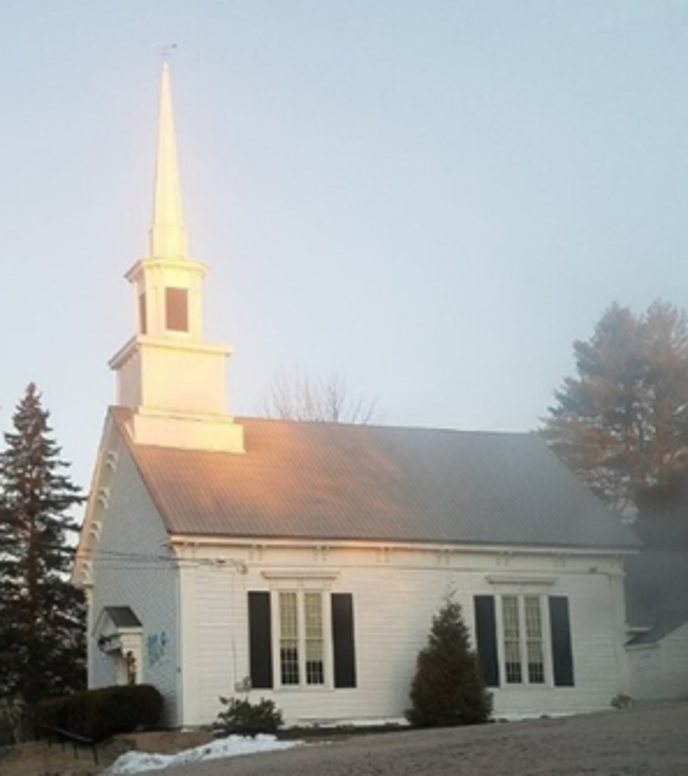
Union Congregational Church of Hancock – Rev. TJ Mack
13 Someone in the crowd said to him, “Teacher, tell my brother to divide the family inheritance with me.” 14 But he said to him, “Friend, who set me to be a judge or arbitrator over you?” 15 And he said to them, “Take care! Be on your guard against all kinds of greed, for one’s life does not consist in the abundance of possessions.” 16 Then he told them a parable: “The land of a rich man produced abundantly. 17 And he thought to himself, ‘What should I do, for I have no place to store my crops?’ 18 Then he said, ‘I will do this: I will pull down my barns and build larger ones, and there I will store all my grain and my goods. 19 And I will say to my soul, Soul, you have ample goods laid up for many years; relax, eat, drink, be merry.’ 20 But God said to him, ‘You fool! This very night your life is being demanded of you. And the things you have prepared, whose will they be?’ 21 So it is with those who store up treasures for themselves but are not rich toward God.”
---
Luke frames our parable this way: a brother is concerned that he is not getting his fair share of the family inheritance. My New King James Version, Cultural Backgrounds Bible notes that, “Inheritance disputes were common (though far more among Gentiles) and they sometimes divided families. Although in Jewish teaching the eldest son received a double portion (Deut. 21:17), disputes still arose and rabbis, as experts in the law, were sometimes called to resolve them. For Jesus to treat a normally legitimate legal recourse here as a sign of greed seems to radically value relationships over property.”
That is what Jesus does, places emphasis and value on relationships over property. We, many of us anyway, sure have a hard time with that. We want to be treated fairly. And we want others to be treated fairly. That may be why many of us give our time and our talents to this church in the local, national, and international settings. We work for peace and justice. We work to end food insecurity. We work to ensure health care for all. We work so that all have adequate housing options. All of this is good, of course. Jesus also worked for peace and justice.
So then, why does Jesus blow off the request for help in receiving a share of the family inheritance? It seems his focus is not on ensuring that we get an equal share, or even a fair share. Jesus’ concern was far deeper. Jesus’ priority is not earthly riches but spiritual riches. His concern was for how the desire for monetary inheritance was getting in the way of relationship with God. Where was the young man’s heart? Where are our hearts?
Of course, Jesus answers the young man by way of a parable. How does this parable speak to us? Are we one with excess? One in need? Every one of us would do well to examine our hearts.
What does it mean to be “rich toward God”? Let’s work toward the answer by exploring the three G’s of this parable according to graphic artist Bertram Poole. The three g’s of (1) greed, (2) gratitude, and (3) generosity.
One can immediately see the progression in Bertram’s thinking. Ideally, this parable helps us move from greed to gratitude to generosity.
#1 Greed. Can we recognize in ourselves the self-centeredness that takes up space in our being? Wanting more than we need? Consuming more than our fair share of natural resources to the detriment of others? Wanting more creature comforts for ourselves knowing that others do not have enough?
How do we do better?
#2 Practice gratitude. Do we remember to take time out during the day to express gratitude for our circumstances? Perhaps at breakfast, lunch, and dinner if we are fortunate enough to eat that frequently. Perhaps as we put our heads on our pillow at the end of our day – again – supposing we have the stability of a home and a bed. Or at random moments throughout the day and night as we pause to give thanks for the constant presence of God with us.
#3 Generosity. How often do we consider the needs of others? Annually, quarterly, monthly, weekly, daily, hourly, with every breath we take? Are our offers of generosity made after consulting our financial planner or our spouse? Does taking it to God in prayer play into our decision making, first, last, or at all?
Where does generosity begin? From excess? From enough? From the heart?
How would you or I, how do you and I respond if put in the situation of the landowner in this parable? Are we also, fools? Confusing, or substituting earthly riches for rich relationship with God? Are we hoarding more than we can ever, ever hope to need? Are we making decisions based solely on our wants or do we consider the needs of the widows and orphans, the less fortunate, the stranger or the foreigner?
Judy Chicago’s untitled poem is placing her readers on a path to becoming rich with God.
And then all that has divided us will merge
And then compassion will be wedded to power
And then softness will come to a world that is harsh and unkind
And then both men and women will be gentle
And then both women and men will be strong
And then no person will be subject to another’s will
And then all will be rich and free and varied
And then the greed of some will give way to the needs of many
And then all will share equally in the Earth’s abundance
And then all will care for the sick and the weak and the old
And then all will nourish the young
And then all will cherish life’s creatures
And then all will live in harmony with each other and the Earth
And then everywhere will be called Eden once again
(Judy Chicago, Untitled Poem from “The Dinner Party”, http://www.judychicago.com/author/merger-poem.php (accessed Dec. 14, 2015).
None of this is simple. Our world and local economies are complex systems. What can we do? We can all approach our decision making and encourage our government leaders to approach their decision making, with open and generous hearts. Decisions that consider the greater societal good rather than focusing on individual profit and gain.
What can we build instead of bigger barns? We can build stronger communities.
The farmer in the parable doesn’t need a bigger barn. He needs a bigger heart.
Abundance is not the problem. How we choose to make decisions around abundance is what is at issue.
Note the pronoun “I” throughout the parable. It seems the landowner was thinking only of himself throughout the decision-making process of solving his dilemma of having too much.
When we find ourselves with abundance and ask the question, “What should I do?” may we remember to consider others in addition to ourselves. Who needs this more than me? How can I be part of the food/clothing/housing/healthcare solution? How much is enough? How much is too much?
What should we do? Sometimes we are like the person in the parable wondering what to do with the problem of excess. We talk only to ourselves; we consider only ourselves. May we remember to talk with God before arriving at solutions. May we talk with and consider those intimately familiar with need and want and lack to better understand what helpful solutions might look like.
May we all be rich with God. May everywhere be called Eden once again.
Amen
Rev. TJ Mack – August 3, 2025


Comments